
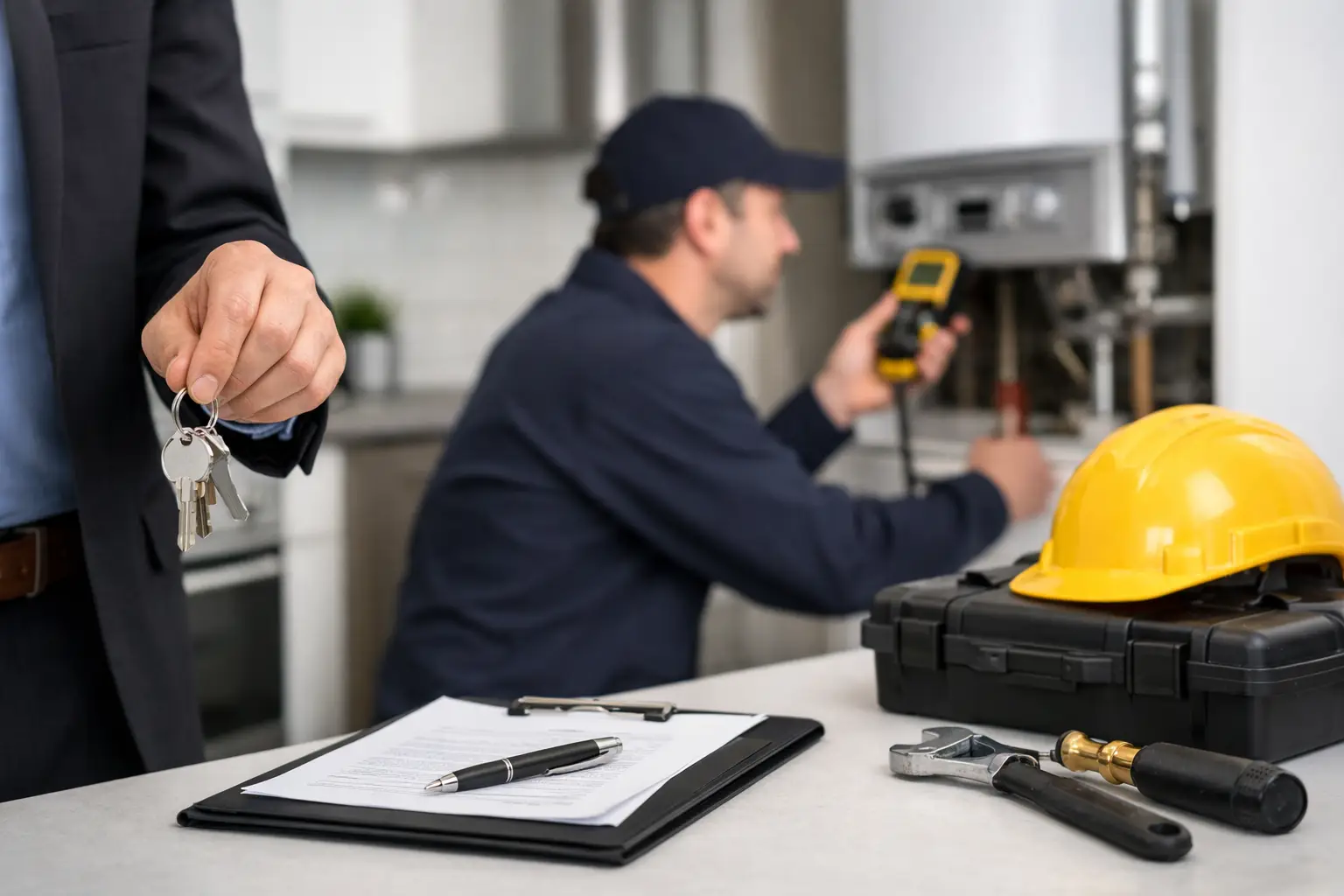
Landlord Gas Certificates and Your Legal Duties

A missed gas check can leave a tenancy non-compliant, delay a move-in and, more seriously, put people at risk. Landlord gas certificates are not optional paperwork. They are the record that the gas appliances, pipework and flues you are responsible for have been checked by a Gas Safe registered engineer.
For landlords and letting agents, the job is straightforward when it is planned properly: arrange the annual inspection, provide access, receive the record and give a copy to the tenant. The problems usually arise when a certificate expires during a busy changeover, a tenant cannot be contacted, or an appliance is found to be unsafe.
What is a landlord gas certificate?
A landlord gas certificate is commonly called a CP12. Its formal name is a Landlord Gas Safety Record. It is produced after a Gas Safe registered engineer has completed the required annual gas safety checks at a rented property.
The engineer checks the condition and safe operation of relevant gas appliances, as well as the associated flues and pipework. This can include a gas boiler, gas fire, cooker or hob supplied by the landlord. The check is designed to identify faults that could lead to gas leaks, fire, explosion or carbon monoxide exposure.
The record normally confirms the property address, the appliances checked, the engineer's Gas Safe registration details, the date of the inspection and any defects found. Keep it clear, legible and available. A digital certificate is acceptable, provided it can be supplied to tenants and retained for your records.
A CP12 is not the same as a boiler service. A boiler service is a more detailed maintenance appointment intended to help keep the appliance efficient and reliable. An annual gas safety check is a legal compliance check. In many properties, arranging both at the same visit is sensible, but one does not automatically replace the other.
Who needs landlord gas certificates?
If you let a residential property with gas appliances, pipework or flues that you own or are responsible for, you will usually need an annual gas safety check. The duty applies to private landlords, managing agents acting for landlords, housing associations and others responsible for rented accommodation.
The legal requirements come from the Gas Safety (Installation and Use) Regulations 1998. You must make sure that gas fittings, flues and appliances are maintained in a safe condition, checked at least every 12 months, and inspected by a properly registered Gas Safe engineer.
The responsibility cannot simply be passed to a tenant or letting agent. An agent may organise the appointment, but the landlord remains accountable for meeting the legal duty. For a portfolio landlord, that makes a reliable renewal system essential.
There are some practical grey areas. A tenant's own portable gas appliance is not normally part of the landlord's annual check. However, landlord-owned pipework, flues and appliances remain your responsibility. If there is any doubt about who owns an appliance or whether it is connected to the property's gas supply, ask the engineer before the inspection.
When must the check be completed?
The gas safety check must be carried out every 12 months. You can arrange it up to two months before the current record expires and preserve the existing renewal date, provided the timing rules are met. This gives landlords useful flexibility and avoids a last-minute expiry.
Once the check is complete, you must provide the current gas safety record to an existing tenant within 28 days. New tenants must receive a copy before they move in. You must also keep records for at least two years.
These deadlines matter during a tenancy changeover. A property might be empty for only a few days, but that does not remove the need to have the current record ready before the next tenant takes occupation. Booking early is usually easier than trying to arrange access on the final day of a tenancy.
A simple renewal routine
Set a reminder around eight to ten weeks before expiry. That leaves time to contact the tenant, arrange a suitable appointment and deal with any repairs without allowing the certificate date to lapse.
For larger portfolios, keep the expiry date, property address, tenant contact route and appliance details in one place. It is a basic admin task, but it reduces missed renewals and makes it easier to prove that reasonable steps have been taken to comply.
What happens during a gas safety inspection?
The engineer will inspect the relevant appliances and test that they are operating safely. The exact work depends on the property and equipment installed, but the appointment may include checking for gas tightness, correct combustion, adequate ventilation, safe flue operation and effective safety devices.
They will also look for visible signs of deterioration, poor installation, blocked flues or unsafe positioning. A gas appliance can appear to work normally while producing unsafe combustion products, which is why an annual professional check is required.
The engineer needs access to each relevant appliance, its controls and, where necessary, flues or inspection points. Tell the tenant in advance what will be checked and how long the visit is likely to take. Clear communication makes access far more likely and helps avoid a wasted appointment.
If an appliance is safe, the record can be issued once the inspection is complete. Bournemouth Gas Certificates provides same-day gas safety certificates where the check can be completed and the required information is available.
If an appliance fails the inspection
Not every inspection produces a clean record. An engineer may identify an issue that needs repair, from a minor fault to a serious safety defect. The right response depends on the classification of the problem and whether the appliance can safely remain in use.
If an appliance is assessed as unsafe, the engineer may turn it off, disconnect it or attach a warning label. Do not reconnect or use it until a qualified Gas Safe engineer has completed the necessary repair work. Trying to keep a boiler, cooker or fire in use because tenants need it is not a safe shortcut.
Arrange repairs promptly and retain the paperwork. Where the fault affects heating or hot water, consider your wider repairing obligations too. A valid annual record does not excuse a landlord from responding quickly when a gas appliance later develops a fault.
It is also worth remembering that a gas safety record reflects the condition of the installation on the day of inspection. It is not a guarantee that an appliance will never fail. Ongoing maintenance and prompt attention to tenant reports remain part of responsible property management.
Tenant access and missed appointments
Landlords must take reasonable steps to gain access for gas safety work, but tenants should not be forced into allowing entry without proper notice or agreement. Give written notice, offer reasonable appointment options and keep a record of every attempt to arrange access.
If a tenant misses an appointment, do not leave the matter until the certificate expires. Contact them again, explain that the inspection is a legal safety requirement and offer alternative times. Evening and weekend availability can be particularly useful for tenants who work during the day.
Keep copies of letters, emails, messages and appointment confirmations. If access is repeatedly refused, that evidence helps demonstrate that you have taken reasonable steps to comply. Seek appropriate legal advice if the situation cannot be resolved, especially where there is a concern about an unsafe appliance.
Common mistakes that create compliance problems
The most common error is assuming a boiler service covers the CP12 requirement. It may not. Ask specifically for a landlord gas safety check and make sure you receive the completed record.
Another mistake is using an engineer who is not appropriately registered for the work. Always use a Gas Safe registered engineer and check that they are qualified for the type of appliance being inspected. Registration alone is not a substitute for the correct appliance category.
Landlords also sometimes forget that a new tenant needs the record before moving in, not after the keys have been handed over. Finally, do not rely on an old certificate after a major appliance change. If you install a new boiler, gas hob or fire, make sure the installation is completed correctly and consider whether an updated safety record is needed for the tenancy file.
A current certificate is one of the simplest ways to protect tenants, property and your position as a landlord. Put the renewal date in the diary now, arrange access early and deal with any faults before they become an urgent problem.


Comments