
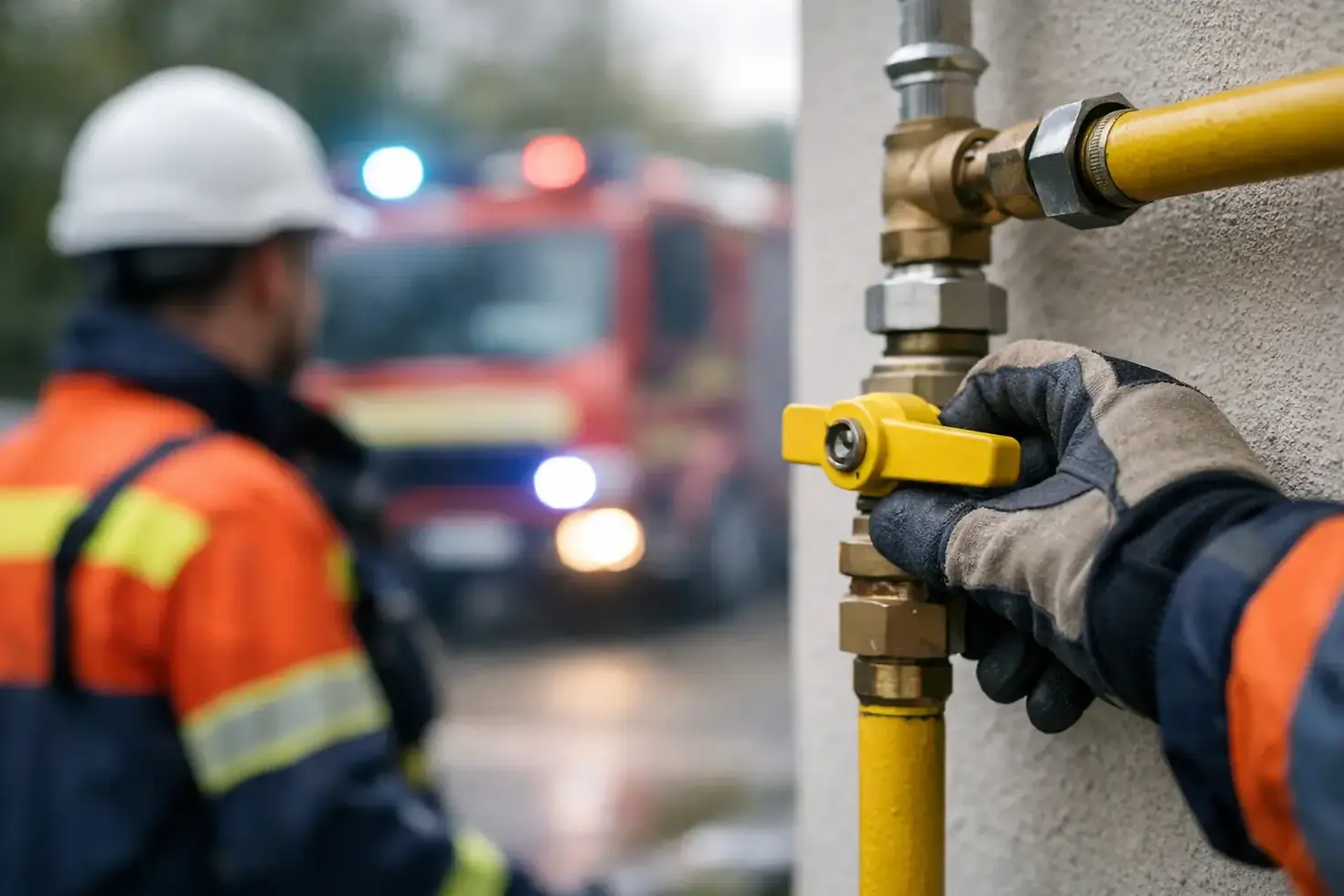
Gas Supply Isolation During a Gas Emergency

A smell of gas, a hissing sound near pipework or a carbon monoxide alarm is not a problem to leave until tomorrow. Gas supply isolation is the immediate safety measure that can reduce risk while the correct emergency support is arranged. Knowing what to do, and what not to do, protects tenants, homeowners and neighbouring properties.
For landlords and managing agents, this is also about having a clear response plan. A tenant may not know where the gas meter is, whether they can turn the supply off or who to contact outside normal working hours. Clear instructions can prevent hesitation when it matters.
When gas supply isolation is needed
Gas supply isolation means stopping the gas supply at the appropriate control point. In an emergency, this is usually the emergency control valve next to the gas meter. It is not the same as turning an appliance control to the off position, and it is not a substitute for finding and repairing the fault.
Isolation may be necessary if there is a suspected gas leak, damaged gas pipework, a strong or unusual gas smell, or a hissing noise around the meter, boiler or pipework. It may also be required before a qualified engineer carries out certain installation, repair or testing work.
Not every fault requires an emergency shut-off. A boiler that has stopped producing hot water, for example, may be inconvenient but does not automatically mean there is a gas escape. If there is no smell of gas, no alarm and no obvious damage, switch the appliance off if possible and arrange a Gas Safe registered engineer. Do not remove covers or attempt to investigate internal components yourself.
What to do if you suspect a gas leak
Your priority is to get people away from the risk and avoid anything that could create a spark or flame. If it is safe to reach the meter, turn the emergency control valve off. This is normally a lever beside the meter. On many installations, the gas is off when the handle sits at a right angle to the pipe. Do not force a stiff valve, interfere with the meter or put yourself at risk to reach it.
Take these actions straight away:
Put out naked flames and do not smoke, light matches or use lighters.
Do not operate electrical switches, doorbells, plugs or appliances, including mobile phones while inside the property.
Open doors and windows by hand if this can be done safely, then leave the building.
Keep other people away from the property and call the National Gas Emergency Service on 0800 111 999 from outside.
Call 999 if there is immediate danger, fire, an injury or anyone is unwell.
Do not turn the supply back on simply because the smell appears to have gone. A gas escape needs professional assessment. The emergency service or a Gas Safe registered engineer will advise on the next safe step.
Carbon monoxide needs a different response
Carbon monoxide has no smell, colour or taste. A carbon monoxide alarm, headaches, dizziness, nausea, breathlessness or confusion around a gas appliance should always be taken seriously. Switch off the appliance if it is safe to do so, open windows and doors, leave the property and seek urgent medical advice where anyone feels unwell.
If a carbon monoxide alarm sounds, do not assume the issue is a flat battery or a false alarm. Ventilation may reduce immediate exposure, but it does not identify the cause. The appliance must be checked before it is used again.
Appliance isolation is not full gas isolation
Many cookers, gas hobs and boilers have local isolation valves. These valves allow a qualified engineer to isolate one appliance without shutting off the whole property. They are useful for planned work, replacement appliances and fault diagnosis, but their location and use vary.
For homeowners, the practical point is simple: do not rely on an appliance switch as proof that the gas is off. Turning a hob control to zero stops the burner, but it does not isolate the pipe supplying the appliance. If you suspect a leak, use the emergency control valve only if it is safe, leave the property and report it.
For a planned gas hob installation or boiler repair, the engineer will identify the right isolation point, test the installation and confirm that it is safe to use. This is particularly important where pipework is concealed, appliances have been moved, or a property has had recent kitchen work.
Gas supply isolation in flats and rented homes
In a house, the gas meter may be in a cupboard, garage, hallway or external meter box. In flats, the meter can be inside the property, in a shared meter room or within a communal area. Tenants should know where their own meter and emergency control valve are located before an emergency occurs.
Landlords and agents should make this part of the handover process. A short explanation at move-in is useful, especially for tenants new to the property or unfamiliar with gas heating. The emergency number should also be easy to find in the tenancy information.
Access creates a real trade-off in some properties. An external meter box is convenient in an emergency but needs to remain accessible. A locked communal meter cupboard may help prevent unauthorised access, but residents need a workable emergency arrangement. Building managers should ensure that emergency services can gain access without delay.
Never tell a tenant to dismantle a cupboard, remove a meter cover or access restricted service areas to isolate a supply. If the valve cannot be reached safely, the right action is to leave the property and call the gas emergency service from outside.
What landlords are responsible for
A valid Landlord Gas Safety Record, often called a CP12 certificate, confirms that the relevant gas appliances, flues and pipework have received the required annual safety checks. It does not remove the need to respond properly if a tenant reports a smell of gas or a fault between inspections.
Landlords must arrange annual checks by a Gas Safe registered engineer, provide a copy of the record to existing tenants within 28 days, give new tenants a copy before they move in, and keep records for at least two years. They should also ensure repairs are dealt with promptly and appliances are not returned to use until they are safe.
An annual inspection is a compliance requirement, but it also gives the engineer an opportunity to identify warning signs such as poor combustion, inadequate ventilation, unsafe flues or appliance defects. It is not a guarantee that a later incident cannot happen. Tenants still need clear reporting routes and a fast response when concerns arise.
For a managed portfolio, keep a current record of each property's meter location, appliance details, certificate date and tenant contact information. This makes it easier to act quickly during a call-out, particularly at evenings and weekends.
When a Gas Safe engineer is required
Gas work is not a general DIY job. A Gas Safe registered engineer is required for installation, servicing, repairs, alterations and safety testing involving gas appliances and pipework. This includes reconnecting an appliance after repair, replacing a gas hob, investigating a possible leak and checking a boiler following a shutdown.
After an emergency isolation, the engineer will assess the reason for the shut-off before restoring the supply. Depending on the fault, this may involve tightness testing, checking appliance operation, inspecting flues and ventilation, and repairing or replacing unsafe components. The correct approach depends on the property, appliance type and findings on site.
If an appliance is classed as unsafe, it may need to remain disconnected until repairs are completed. That can be frustrating during a tenancy or property changeover, but restoring an unsafe appliance to use is never an acceptable shortcut.
Make the response plan clear
Every property with gas should have a known meter location, accessible emergency control valve, working carbon monoxide alarms where required and a clear route for reporting faults. These simple measures reduce confusion when a tenant smells gas or an appliance starts behaving unexpectedly.
If you need planned gas work, a safety check or help after an isolation, arrange a qualified engineer promptly. Bournemouth Gas Certificates provides practical, compliant domestic gas support across Bournemouth, Poole and Christchurch, with appointments available when property issues cannot wait.


Comments